

Years ago, my business coach taught me that magic flows where attention goes. Whatever you give your attention to tends to grow.
That's as true for the numbers in your business as for anything else. When you watch a number, you start to notice what moves it. You spot the good weeks and the quiet ones. You begin to see what's working, and what isn't. The numbers you watch are the ones you can do something about.
The numbers you ignore still move. You just don't see it happening.
But which ones should you be watching? It's easy to look at just one: what's in the bank. That's a bit like checking the fuel gauge and ignoring every other light on the dashboard. The car might be fine. Or something might be about to go wrong, and you won't know until it does.
A bank balance also only tells you where you are today. It doesn't tell you how you got there, or where you're heading. Some of that money might be next month's tax. A healthy balance might be hiding a drop in new clients that won't show up for another couple of months.
You don't need a spreadsheet full of figures, or a head for maths. A handful of numbers, checked regularly, will tell you far more. Here are the ones worth watching, grouped into four areas, with what each one can tell you. They work whether you see clients one to one, run classes or sell packages.
Money: what's coming in and going out
Income. This is what came in this month. It's the number most people already know. On its own, though, it only tells part of the story. A good month might be followed by a quiet one, so look at it over several months, not just one.
Outgoings. This is everything the business spent. Include the small things too, such as app subscriptions, card fees and bits you pick up on the way to a client. Small costs are easy to forget, but they add up.
What's left. Take your outgoings away from your income. What's left is your profit, and it's the number that actually pays you. Income can go up while profit goes down, so this is the one to watch most closely.
Your true hourly rate. Divide what's left by every hour you worked, not just the booked ones. Include travel, admin, preparation and marketing. The answer can be lower than you'd expect. It's also one of the clearest signs of whether your prices are working.
Money owed to you. Unpaid invoices, late payments and missed direct debits. Money you've earned but not received can't pay your bills. If this number keeps growing, it may be time to look at how and when you take payment.
Clients: who's coming and going
Enquiries. How many people got in touch about working with you. This is the hardest number to count, because enquiries arrive in so many ways: messages, emails, comments, a chat after a class. I know it's a fiddly one. But for me, enquiries are one of the most useful diagnostic numbers you have. They act as an early warning, and they often drop before your bookings do.
New clients. How many of those enquiries became paying clients. Compare the two numbers. Lots of enquiries and few bookings suggests something is getting in the way between first contact and booking. Very few enquiries suggests people aren't finding you, or aren't sure you're right for them.
Returning clients. How many people came back, rebooked or renewed. Keeping a client usually takes less time and money than finding a new one. If people aren't coming back, it's worth finding out why.
Where they found you. A recommendation, social media, your website, a search, a poster. Ask every new client. Over time, this shows you which efforts are actually bringing people in, and which are taking up time without much return.
Cancellations and no-shows. How often they happen, and what they cost you. An empty slot still took time to plan and hold. If they happen a lot, your booking terms might need a closer look.
Time: where your hours go
Hours worked. All of them. That includes admin, travel, preparation, replying to messages and marketing, not just time with clients. The total can be a surprise.
How full you are. Compare your booked hours, class places or package hours with what you actually have available. If you're nearly full, the only ways to earn more are to charge more or work longer. If you have plenty of space, the focus is on filling it.
Together, these two show whether you have room to grow, or are already at capacity.
Audience: who's paying attention
Email subscribers. People who've asked to hear from you. They've put their hand up, which makes them some of the warmest people you can talk to.
Followers. On whichever platforms you use. Watch whether the number is growing, but also whether people are commenting, sharing and getting in touch.
Followers are nice to have. An email list, though, is yours. If a platform changes its rules, or your account has a problem, your list stays with you.
A number tells you what. You need to ask why.
This is where my background comes in. I specialise in working from the feet up. If your feet aren't working properly, your knees can start to hurt. Treat only the knees, and the pain keeps coming back. So you follow the problem back to its cause.
Numbers work the same way. A number tells you something has changed. It doesn't tell you why. So when a figure moves, ask:
What is happening?
Why is it happening?
What does that mean for the rest of the business?
Where are the connections?
Here's how that might look. Say your new clients drop for two months in a row. You look back and see that enquiries dropped first. Then you notice that was when you stopped posting, because the diary was full. So the real issue isn't bookings at all. It's that your marketing stops whenever you get busy.
One number rarely tells the whole story. It's the connections between them that matter.
Why it's easy to look away
Numbers can feel uncomfortable. It can seem easier not to know, especially if you suspect the news isn't good. But not looking doesn't change the numbers. It just means you find out later, when there are fewer options.
Looking regularly works the other way. Small changes get spotted while they're still small. And good news gets noticed too, which matters just as much.
Making it a habit
In my own business, I track income, class attendance and Facebook followers regularly. Between them, they show what my classes bring in, how full they are, and whether my audience is growing. You don't need to track everything at once to get started.
Pick one day a month and put it in your diary, like an appointment with a client.
Write down the same numbers each time, so you can compare month to month.
Start small if you need to. If all of them feels like too much, begin with three: income, what's left, and enquiries.
Look for patterns, not one-off blips. Three months will tell you more than one.
Note what was going on that month, such as a holiday, an illness or a new offer. It helps explain the numbers later.
Fifteen minutes a month can be enough to get started. Give your numbers your attention, and see what grows.
Which of these numbers do you already track? Leave a comment below.
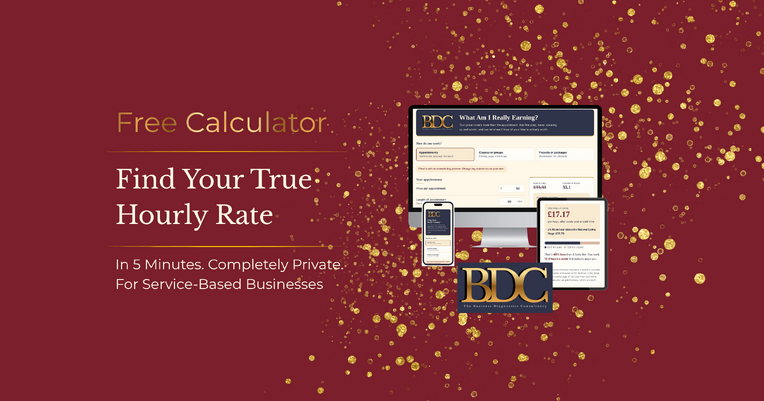
If you'd like to start with your true hourly rate, try my free income calculator, What Am I Really Earning? Add your prices, time and costs, and it does the maths for you.
Find Out What You're Really Earning → nicolabeard.com/calculator

Comments