

Twenty-six years of running my own businesses gives you a particular kind of perspective. You've seen the quiet months and the busy ones, the ideas that took off and the ones that didn't, and you start to recognise the patterns behind them. You also notice why some skilled people build something that lasts, while others who are every bit as good at their work struggle to keep it going.
The difference between them was rarely skill. It was almost always how the business around that skill was set up. Being excellent at your craft and running a business well draw on separate muscles, and the second set needs training just as deliberately as the first.
Getting the business side right isn't about spreadsheets for their own sake. It's what gives you the time, freedom and steady income to enjoy the work you love and make the difference you set out to make. Of everything I've learned, these three have made the biggest difference, each with a quick one to try on your own business.
1. Help word of mouth along
For me, word of mouth is the best marketing a small business can have. A recommendation from someone people already trust does more than any advert ever could.
But it works best when it isn't left to chance. You can't control when a recommendation happens, and if it's your only way of finding new clients, you're relying on other people to remember you at the right moment.
The businesses that stay steady make word of mouth easy. They're clear about who they help, so happy clients know exactly who to send their way. They ask for recommendations and reviews rather than hoping for them. And they give people something simple to pass on, like a link or a free resource.
A quick one to try: write down where your last five new clients came from. Then ask yourself: if a happy client wanted to recommend you tomorrow, what would make that easy for them?
2. Be clear about who you want to work with
Trying to speak to everyone feels like the safe option, especially when you're building up. But marketing aimed at everyone tends to sound vague, and the people you'd most love to work with don't realise you're talking to them.
Being clear about who you want to work with isn't about who you'll accept. Anyone can still book. It's about who your marketing speaks to. When you write and post with one particular kind of person in mind, that person recognises themselves straight away, and the right enquiries start arriving more often.
A quick one to try: think of the client you most enjoy working with. What do they value, what were they struggling with before they found you, and where do they spend their time? Those answers tell you who to talk to and where.
3. See your business the way a new client does
You know your business inside out, which is exactly why it's hard to see what a newcomer sees. Somebody who has never heard of you goes through a series of small steps: they hear your name, they look you up, they decide whether to get in touch, and they find out how to book.
At any one of those steps they can quietly drift away, and you'd never know. A website that's awkward on a phone, a page with no obvious next step, a reply that takes three days. None of these feel like a big deal from the inside. From the outside, each one is a reason to go elsewhere.
A quick one to try: imagine you've never heard of yourself. Search for what you offer, find your business, and try to book, all on your phone. Notice every moment you hesitate.
What ties them together
All three come down to the same thing: setting your business up on purpose, rather than leaving it to chance.
Before lockdown, I'd already been working on a membership and a recurring income plan, so I knew what was coming in each month. I'd automated payments to make things easier for my clients, so they didn't have to think about it and could just enjoy the classes. I'd also built an online class library so they could keep going at home between classes. When lockdown arrived, my classes moved online within days. I hadn't planned for a pandemic, but I had been planning the business, and that's what made the difference.
None of this needs a big overhaul. It needs a clear look at what's actually happening, why, and what it means for everything else.
Which of these made you stop and think about your own business? I'd love to hear. Just hit reply or leave a comment.
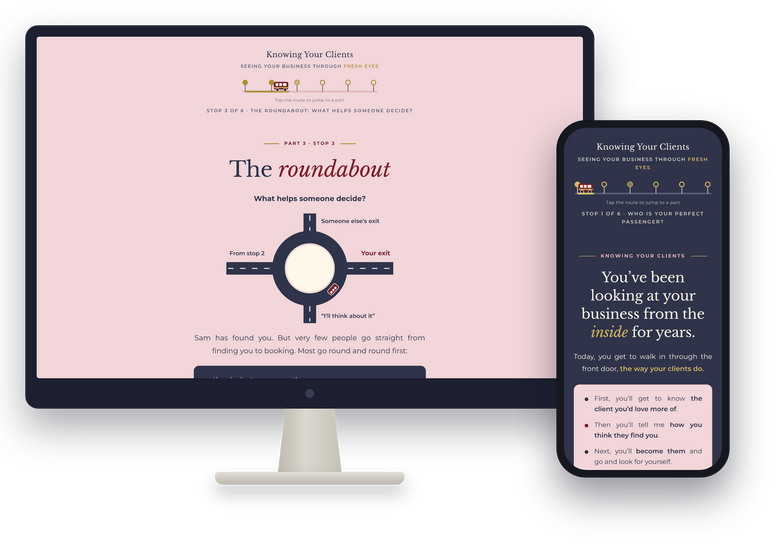
If you'd like a guided place to start, Knowing Your Clients walks you step by step through who your clients are and how they come to find you. Work through it whenever suits you, and keep the summary at the end.

Comments